
A History of Korean Immigrants
A History of Overseas Korean
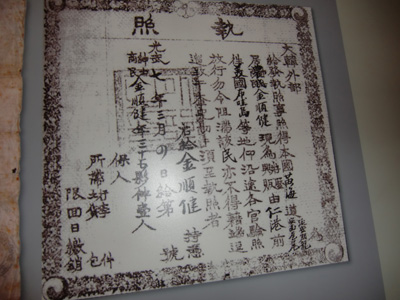
The history of South Korean citizens and Korean ancestry living in other countries (hereinafter referred to as “overseas Korean”) began with voluntary immigration to border areas with China and Russia triggered by famine at the end of the 19th century. Since then, there were agricultural labor migrants to Hawaii and Mexico led by the government, and then they continued to migrate to Manchuria, Japan and the former Soviet Union area for the purpose of labor and recruitment since the annexation of Korea. Since the 1960s, migration on the assumption of returning home in the future continued at a certain level, such as dispatching miners and nurses by the intergovernmental agreement with Germany, migration of workers engaged in infrastructure development in the Middle East region, studying abroad in Europe and the United States. In addition, due to the amendment of the US immigration law in 1965, a significant number of immigrants were granted to South Korea, an ally of the Vietnam War. For this reason Korean rich people immigrated to the US for political and economic reasons. The Korean who went to the US in the 1960s has already been prolonged. While securing and improving the legal status of overseas Koreans in the US is advancing, the aging of the population is proceeding as well.
With regard to overseas Koreans, research is progressing on communities based on church and exploring the idea of their identity. There is some accumulation of research on these. The Korean church community is a source of living information in the US for temporary residents and early immigrants. In some cases, it plays a role of introducing poor people to the administration. And identity research is mainly focused on exploring homogeneity and differences between overseas Koreans living in Japan and China, and Koreans in their home country.
Unlike these, this survey focused on what was not so much interested so far. For example, “facilities and organizations that support overseas Koreans who acquired permanent residence qualifications and US citizenship under the support of US administrative agencies,” “Activities for improving the interests of overseas Koreans in the US through these facilities and organizations in the US,” “Home country activities to strengthen the position within Korea through cooperation with South Korea.” The Korean government developed policies aimed at globalization of society and economy in the 1990s, and as a part of it, established a system for maintaining relations overseas Korean in the US with South Korea. We conducted interview survey on how this system works in the US.
Through the survey, we observed the situation of the welfare of elderly people supported by overseas Koreans, and also showed that overseas Koreans are increasing their presence in both the US and South Korea through activities to improve the status in the US and publicity activities. For details, please refer to the 2018 survey summary page.